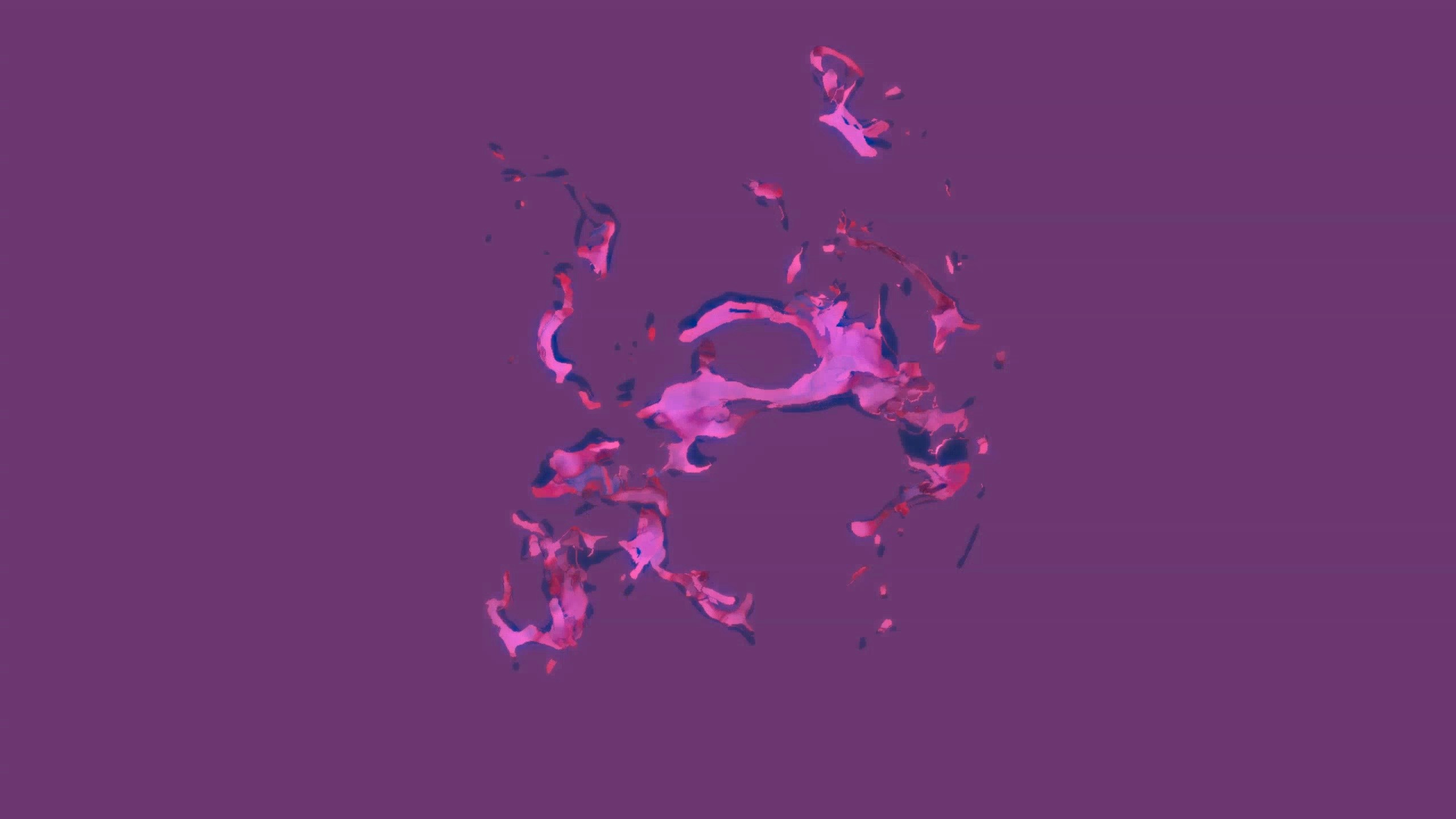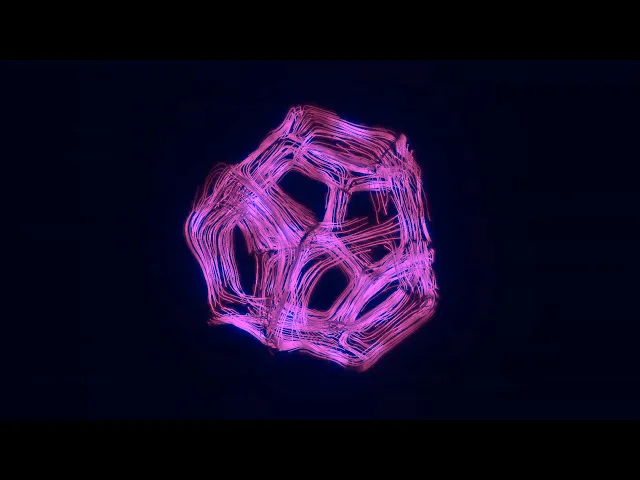

Effluve is a live visual performance (~VJing) in collaboration with a music artist (~DJ).
Over several hours, we see a digital liquid flow along an invisible structure. Reacting to frequencies and beats, the liquid dances to the rhythms of the music. Its materiality is in constant evolution, sometimes flowing, sometimes syrupy, sometimes trickling, sometimes raging. The result is complex and hypnotic visuals that lead the audience into a state of trance or flow.
Genesis
Effluve was born from research on the link between complexity, attention, and flow state. This research made me understand the necessity of having complex visuals, that constantly surprise a little with new things to maintain the audience's attention and bring them toward a state of flow.
The realistic liquid simulation therefore produces captivating visual changes because they are complex and hard to predict while remaining coherent. The famous "hedonic optimum" described by Berlyne.
The visual artist who can intervene live on the fluid's rendering brings an additional layer of complexity. The goal here is not to replace the artist but to provide them with raw material already dense with complexity.
Research papers mentioned:
▸ Novelty, complexity, and hedonic value
How is it made
First, using the 3D software Houdini, multiple hours of complex fluid simulation are simulated and then rendered into static frames. These frames do not contain the final visuals of the fluid but rather fluid information such as speed, direction, distance, etc. per pixel.
Then, there is the main software used during the live performance, made with VVVV.
The program takes 3 inputs:
▸ The fluid simulation information frames
▸ Live music from the musical artist
▸ Controls tweaked live by the artist
From these 3 things, the final visual is produced in real-time and shown to the audience.
Both the music and the visual artist shape the visual in real-time.